Central Area Parking Strategy and On Street Parking Permit Policy and Pilot Study
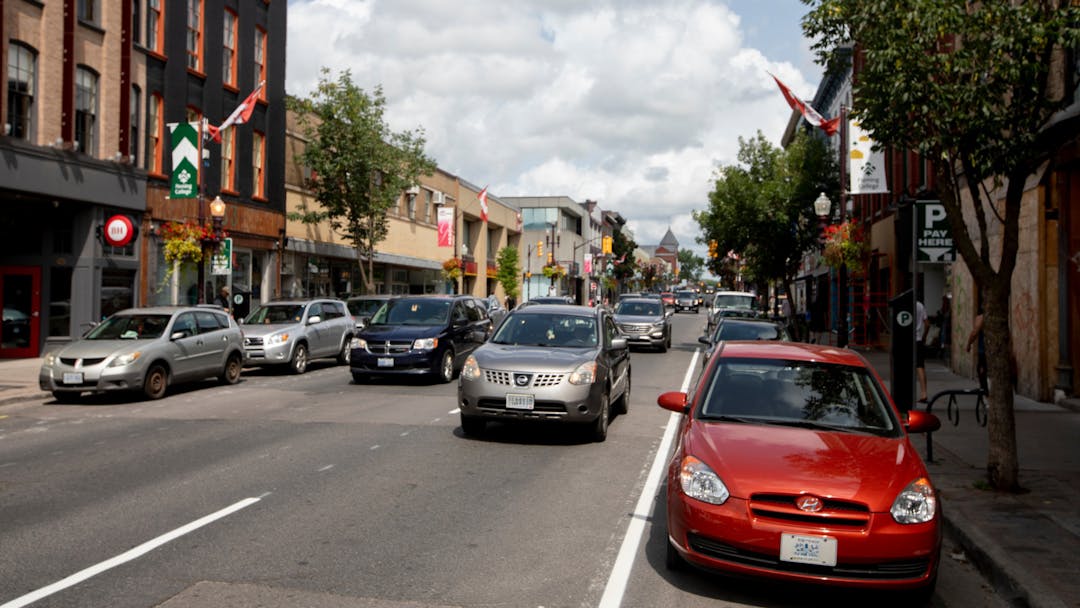
This project consists of two distinct studies concerning parking practices in the City
Central Area Parking Strategy
The Central Area Parking Strategy will be formed with the ultimate goal of supporting growth by leveraging City facilities to reduce requirements for on-site long-term parking while ensuring sufficient short-term parking is available to support an economically healthy and vibrant core.
Commencing in 2026 the development of the strategy will consider short-term and longer-term parking requirements for cars and bicycles, including accessible parking requirements in the Central Area.
Recommendations by the City’s Consultant will provide guidance regarding space type (accessible, small vehicle, motorcycle, electric vehicle with charging infrastructure, bicycle and specialized vehicle). The Consultant will also provide guidance for commercial/employment/institutional parking space requirements as part of the assessment of Central Area parking requirements.
Lastly, The Central Area Parking Strategy will review current and recommended improvements to the City of Peterborough parking operations, including parking rates, monthly garage passes (quantity and rate), as well as areas within the central area where paid parking should be implemented. The recommendations will be made with a view to maximizing parking revenue without sacrificing economic vitality, while also encouraging active transportation and transit use.
On-Street Parking Permit Policy and Pilot Study
The program is intended to reduce the burden on development to accommodate all required parking within a single site. At the same time, the policy will be written to ensure there is sufficient on-street parking available for short-term parking. The project will determine the available public parking space throughout the City. Using this information, limits on quantity of parking permits will be established and included in the new policy.
A draft On-street Parking Permit Program and three separate parking permit pilot areas will be prepared and presented to City Council. Following Council’s endorsement, the Pilot studies will be implemented in three different areas of the City. Information from residents, users of the program as well as City-wide consultation will be completed during the pilot studies to help inform the future program.
The Pilot Studies will not create new parking spaces, and operating terms and conditions for each Pilot Study area have not been finalized yet. There are no plans to dedicate specific spots for permit holders and the maximum number of permits available will be limited to ensure there is still sufficient short-term parking available for non-permit holders.
All parking, whether with a permit or without, must still comply with the current parking by-law. This includes prohibitions against interfering with vehicle movements, snow removal and minimum separation from driveways, fire hydrants, crosswalks, intersections, and bus stops. A permit will only allow a permit holder to park longer than current maximum parking limits and will exempt the permit holder from the seasonal parking ban from 2:00 am to 6:00 am. Parked vehicles that interfere with traffic movement or snow removal will be subject to enforcement.
A variety of permit types will be available. These include free 24-hour permits (up to 10 per residential address), 24 and 48 -hour permits, 7-day permits, 1-month, 6-month and possibly 1-year permits. As is the case today, short duration on-street parking will not require a permit. During the pilot studies, parking spaces will not be dedicated to permit holders. Parking spots will be available on a first-come basis and having a permit does not guarantee a parking spot. The maximum number of permits issued within a pilot area will not exceed 75% of the total legal parking spaces.
Pilot project areas have been selected to test a variety of operating conditions to provide robust data that can be relied upon to inform a permanent On-Street Parking Permit program in expanded areas throughout the City. City Council has determined the "Parklands" subdivision will not be included as one of the Pilot Study areas. The Pilot programs will proceed with three pilot areas, as shown in the mapping features provided below.
New developments need parking and Snow storage to be put into the planning/ zoning. Houses in subdivisions need driveways you can park 2-3 cars on comfortably, approving subdivisions with houses that aren't close to anything created parking issues. You are not putting your two kids on a bike in February to go get groceries, it is not practical.
There are no pins on the maps b/c they will not allow to post unless you choose a pin type. There are no options available in the pin type drop down. Please correct this error.
Street parking in the avenues is challenging. The roads are narrow and as winter progresses and snow banks build it can be difficult to get down some roads. Especially if a car was parked on the street when the snow plow goes by. If street parking is to be allowed here it should have alternating sides. Snowbanks and cars parked on both sides has made it difficult for me to manoeuvre my sedan down the road, let alone access for garbage/recycling collection or emergency services.
I believe the paid parking concept can work as long as it includes a thorough review of a parking strategy overall. Currently the Avenues (included in Pilot 1) are extremely congested. particularly during the winter months. The only restriction is during the March and April time frame, when parking alternates to "one side parking" apparently for street cleaning. This past winter, there were many times when my street was impassable do to high snowbanks and parking on both sides of the street. I think it would be wise to extend the "one side alternate parking" to a greater number of months, if not all year, as it exists other parts of the city. Also, as another individual has commented, enforcement of "offenders" to current parking guidelines is very hit and miss. Cars were parked on our street overnight all winter long and enforcement was virtually non existent. It was a nightmare for residents, snow removal operators, and garbage pick up. If you actually get towed, I can assure you, you wont do it again! I also wonder if you would consider making the streets alternating "one way". This online portal for feedback from residents is a great idea. Will there be any kind of public forum ?
Brian Baker
My one and only question/comment is this:
Who is going to monitor and enforce the parking regulations?
We presently live in a city full of "parking violators" with absolutely no consequences. There are clearly not enough parking enforcement personnel, as is evidenced in my neighborhood every Tuesday-Saturday. A local business allows/encourages patrons to absolutely clog our quiet side streets to the point that emergency personnel cannot access our streets at all. Repeated phone calls to police and by-law enforcement go entirely unanswered. Or worse, they're referred to the "after hours hotline" which is not monitored & the violations continue. In the entire duration of this winter, not once has a parking ticket been issued to anyone parked illegally on our streets, let alone the towing provision being actually applied during active snow removal.
I agree with the other comments posted: it's definitely a "cart before horse" moment. We are not enforcing the current bylaws, so let's offer a paid service to the persons who are currently parking illegally. And then not monitor/enforce accordingly.
I hope that someday, a permitting system like this can be used for the Jackson Park parking lot at Monaghan and Parkhill. As a resident of the townhouse complex there, it's very inconvenient that we can no longer allow guests to stay there overnight when they come for a visit. I understand why the bylaws were changed to prevent people from parking there permanently; a permitting system would be a nice middle ground.
Regarding area 2: A permit system manages parking demand where excess demand exists. In our neighbourhood the problem is the opposite — there is no supply. It will make it more difficult for emergency vehicles to get through.
On-Street Parking Permit Pilot Program – Area 3
With respect to the introduction of the Pilot Programme, it is another instance of the cart being put before the horse; it appears it is a done deal as the permits are scheduled to go on sale March 30. While I acknowledge the city has a parking issue, the City needs to develop a comprehensive parking strategy rather than a fly by the seat of their pants knee jerk reaction introducing band aid solutions as the need arises. The issue with parking arises from the unfettered growth of “rental” properties which are in fact turning into an explosion of rooming houses. Steps need to be taken to control the explosion of student housing requirements; address the problem not the symptoms. While I do not reside within the confines of Pilot Area 3, I do live in close proximity to it and often walk our dog through the area, and occasionally drive through that area.
It appears the concerns of the City are with the landlords and not with the majority of residential property owners who enjoy living in neighbourhoods which were established for families. My concerns deal primarily with public safety, secondarily with residents’ convenience, and feel that the efforts to increase population density in areas designed for single family occupation is entirely misguided.
Living on a street without sidewalks, as I presently do, and encountering the issues arising from walking on the road while cars are driving by, the first thought is that there should be no permitted parking on any residential street which does not have sidewalks. I know there are several streets in the north east quadrant of area 3 which do not have sidewalks. Some of those streets have a high concentration of children who often play on their driveways which are near the roads as some of those streets do not have sidewalks; adding a high number of cars parked on the street without a safe and secure pedestrian walkway is irresponsible. In addition, if there is any dedicated playground space in the area, there should not be any permitted parking along any roadside access to the park.
In the south east quadrant of area 3 is Kawartha Heights Public school, which has been excluded from the pilot area; however, given the high volume of automobiles and school buses which use the adjacent streets to access the school property, a ban should be placed on any parking within 500-750m of school property during school hours. Additionally, there should be a permit parking ban on any street which has a designated school bus pickup area. A portion of Kawartha Heights Blvd. is included in the pilot area; Kawartha Heights Blvd has several designated school bus stops between Applewood Cres and Cherryhill, adding in on street parking would significantly impact traffic flow and reduce safety.
Additionally, any street which is a collector road, funneling traffic in and out of residential areas should have restrictions placed on the hours of permitted parking.
Living on a street which has no parking regulations we often get bottlenecks where cars are parked across from each other on opposite sides of the road significantly reducing traffic flow at times as many drivers are often more concerned with their own convenience rather than the impact of their actions. Appropriate signage will need to be posted on all impacted roads clearly outlining parking regulations to ensure traffic flow is not impacted. The issue is compounded in the winter when windrows often encroach onto the roadway narrowing the available travel portion which would be significantly impacted if an increased number of vehicles were parked on the road. While it is referenced that permits may be suspended during snow removal, this is easier said than done; experience in our neighbourhood indicates that overnight parking restrictions are currently infrequently enforced leading to uncleared snow in some instances. Any enhancement to parking privileges would require consistent 24/7 enforcement.
The area being impacted in this pilot is a long established residential area, primarily consisted of single family dwellings. Increasingly these single family homes are being converted to rental units; however, more alarming is the conversion to rooming houses, something these neighbourhoods were never designed to accommodate. Most of these houses were designed and built with on site parking to accommodate a family’s needs usually 2 parking spots and some may accommodate 4 and with garages maybe up to six. A specific quota by housing unit would be a preferred method rather than a flat 3 permits per address. While our street is not within the pilot area I can count 5 locations which are rental units within 150m of our house and in several cases they have been converted to multiple family units, and in a few cases it appears rentals may be on a room by room basis. These units have multiple vehicles in their driveways, there are a couple which have more vehicles parked than there are parking spots on the property, resulting in makeshift parking areas being created by parking on the front lawns.
While I can appreciate the need for additional housing, rushing through a flawed process is not the answer. The answer is not to lower the standard; from my experience with the impending new development at Sherbrooke and Woodglade, the builder is trying to reduce the required number of parking spots; at what cost to the community if there is insufficient onsite parking and the overflow has to be accommodated on the street. Trying to retrofit a parking policy to fit circumstances which were never designed or envisioned to accommodate a higher population density than what it was designed to accommodate is short sighted.
Maybe the parking issue would be better addressed on a house by house basis where an audit is conducted to determine what if any accommodations need to be made by address. Many of the houses in the city have been built with garages which often go unused, and the vehicles are parked in the driveway and occasionally on the road.
Consideration has to be made to ensure adherence to parking regulations particularly to ensure traffic safety: Sightlines within the intersections of residential streets need to be respected, pedestrian safety has to be respected, parking on one side of the street to ensure traffic flows are maintained, and parking permits need to be limited to a reasonable number in consideration of the capacity of the individual streets.
I do realize there are older sections of the city where parking is a significant concern and other considerations may be relevant in those areas. My comments and concerns are specific to area 3 and the immediate surrounding area.
On-Street Parking Permit Pilot Program – Area 3
With respect to the introduction of the Pilot Programme, it is another instance of the cart being put before the horse; it appears it is a done deal as the permits are scheduled to go on sale March 30. While I acknowledge the city has a parking issue, the City needs to develop a comprehensive parking strategy rather than a fly by the seat of their pants knee jerk reaction introducing band aid solutions as the need arises. The issue with parking arises from the unfettered growth of “rental” properties which are in fact turning into an explosion of rooming houses. Steps need to be taken to control the explosion of student housing requirements; address the problem not the symptoms. While I do not reside within the confines of Pilot Area 3, I do live in close proximity to it and often walk our dog through the area, and occasionally drive through that area.
It appears the concerns of the City are with the landlords and not with the majority of residential property owners who enjoy living in neighbourhoods which were established for families. My concerns deal primarily with public safety, secondarily with residents’ convenience, and feel that the efforts to increase population density in areas designed for single family occupation is entirely misguided.
Living on a street without sidewalks, as I presently do, and encountering the issues arising from walking on the road while cars are driving by, the first thought is that there should be no permitted parking on any residential street which does not have sidewalks. I know there are several streets in the north east quadrant of area 3 which do not have sidewalks. Some of those streets have a high concentration of children who often play on their driveways which are near the roads as some of those streets do not have sidewalks; adding a high number of cars parked on the street without a safe and secure pedestrian walkway is irresponsible. In addition, if there is any dedicated playground space in the area, there should not be any permitted parking along any roadside access to the park.
In the south east quadrant of area 3 is Kawartha Heights Public school, which has been excluded from the pilot area; however, given the high volume of automobiles and school buses which use the adjacent streets to access the school property, a ban should be placed on any parking within 500-750m of school property during school hours. Additionally, there should be a permit parking ban on any street which has a designated school bus pickup area. A portion of Kawartha Heights Blvd. is included in the pilot area; Kawartha Heights Blvd has several designated school bus stops between Applewood Cres and Cherryhill, adding in on street parking would significantly impact traffic flow and reduce safety.
Additionally, any street which is a collector road, funneling traffic in and out of residential areas should have restrictions placed on the hours of permitted parking.
Living on a street which has no parking regulations we often get bottlenecks where cars are parked across from each other on opposite sides of the road significantly reducing traffic flow at times as many drivers are often more concerned with their own convenience rather than the impact of their actions. Appropriate signage will need to be posted on all impacted roads clearly outlining parking regulations to ensure traffic flow is not impacted. The issue is compounded in the winter when windrows often encroach onto the roadway narrowing the available travel portion which would be significantly impacted if an increased number of vehicles were parked on the road. While it is referenced that permits may be suspended during snow removal, this is easier said than done; experience in our neighbourhood indicates that overnight parking restrictions are currently infrequently enforced leading to uncleared snow in some instances. Any enhancement to parking privileges would require consistent 24/7 enforcement.
The area being impacted in this pilot is a long established residential area, primarily consisted of single family dwellings. Increasingly these single family homes are being converted to rental units; however, more alarming is the conversion to rooming houses, something these neighbourhoods were never designed to accommodate. Most of these houses were designed and built with on site parking to accommodate a family’s needs usually 2 parking spots and some may accommodate 4 and with garages maybe up to six. A specific quota by housing unit would be a preferred method rather than a flat 3 permits per address. While our street is not within the pilot area I can count 5 locations which are rental units within 150m of our house and in several cases they have been converted to multiple family units, and in a few cases it appears rentals may be on a room by room basis. These units have multiple vehicles in their driveways, there are a couple which have more vehicles parked than there are parking spots on the property, resulting in makeshift parking areas being created by parking on the front lawns.
While I can appreciate the need for additional housing, rushing through a flawed process is not the answer. The answer is not to lower the standard; from my experience with the impending new development at Sherbrooke and Woodglade, the builder is trying to reduce the required number of parking spots; at what cost to the community if there is insufficient onsite parking and the overflow has to be accommodated on the street. Trying to retrofit a parking policy to fit circumstances which were never designed or envisioned to accommodate a higher population density than what it was designed to accommodate is short sighted.
Maybe the parking issue would be better addressed on a house by house basis where an audit is conducted to determine what if any accommodations need to be made by address. Many of the houses in the city have been built with garages which often go unused, and the vehicles are parked in the driveway and occasionally on the road.
Consideration has to be made to ensure adherence to parking regulations particularly to ensure traffic safety: Sightlines within the intersections of residential streets need to be respected, pedestrian safety has to be respected, parking on one side of the street to ensure traffic flows are maintained, and parking permits need to be limited to a reasonable number in consideration of the capacity of the individual streets.
I do realize there are older sections of the city where parking is a significant concern and other considerations may be relevant in those areas. My comments and concerns are specific to area 3 and the immediate surrounding area.
Pilot Area #3. Thanks for the opportunity to comment. I understand the need to accommodate parking in residential areas. I strongly urge you to not permit street parking on residential streets without sidewalks for public and school children safety.
Many of these roads already have speed reducing tools to slow traffic to protect school kids as they ealk to local schools. Adding parked cars on streets with no sidewalks will have children walking to local schools weaving around the cars/trucks...on foot and on bikes. These are small children who already have to walk on the street to get to school and pretty much anywhere, and who may not be visible to drivers who already have to navigate narrow and winding streets with parked cars. Balancing the parking needs of residents must be carefully weighted against public safety considerations...all at a time when drivers are increasingly reckless....especially where there are no sidewalks...a recipe for disaster if you ask me. I wish you good luck on your pilot and hope you can find a way forward that protects children and the public as well as residential parking needs.